
 kna
Published 10 November 2026. Updated 10 November 2026. Editorial team
Aluminium vs uPVC windows: neither frame wins by default. Aluminium is stiffer and slimmer, so it suits large sliding doors and glass walls, but it blocks outdoor heat only with a thermal break. uPVC insulates well on its own and needs steel reinforcement for stiffness. Compare the exact systems by their tested figures, glazing and installation.
In short
- Aluminium without a thermal break is a cold frame: fine for an open balcony, weak for a cooled room.
- uPVC moves about twice as much as aluminium when it heats up.
- Size limits for sashes come from the system catalogue, not from the salesperson.
- Noise insulation depends on the glass and seals more than on the frame material.
- Compare quotes only for the same size, glass and hardware.
What is the difference between the two frames?
An aluminium frame is made of extruded metal profiles. In a thermally broken system, the outer and inner profiles are joined by an insulating bar, so the metal does not run straight through from the street side to the room side. A system without that bar is called cold.
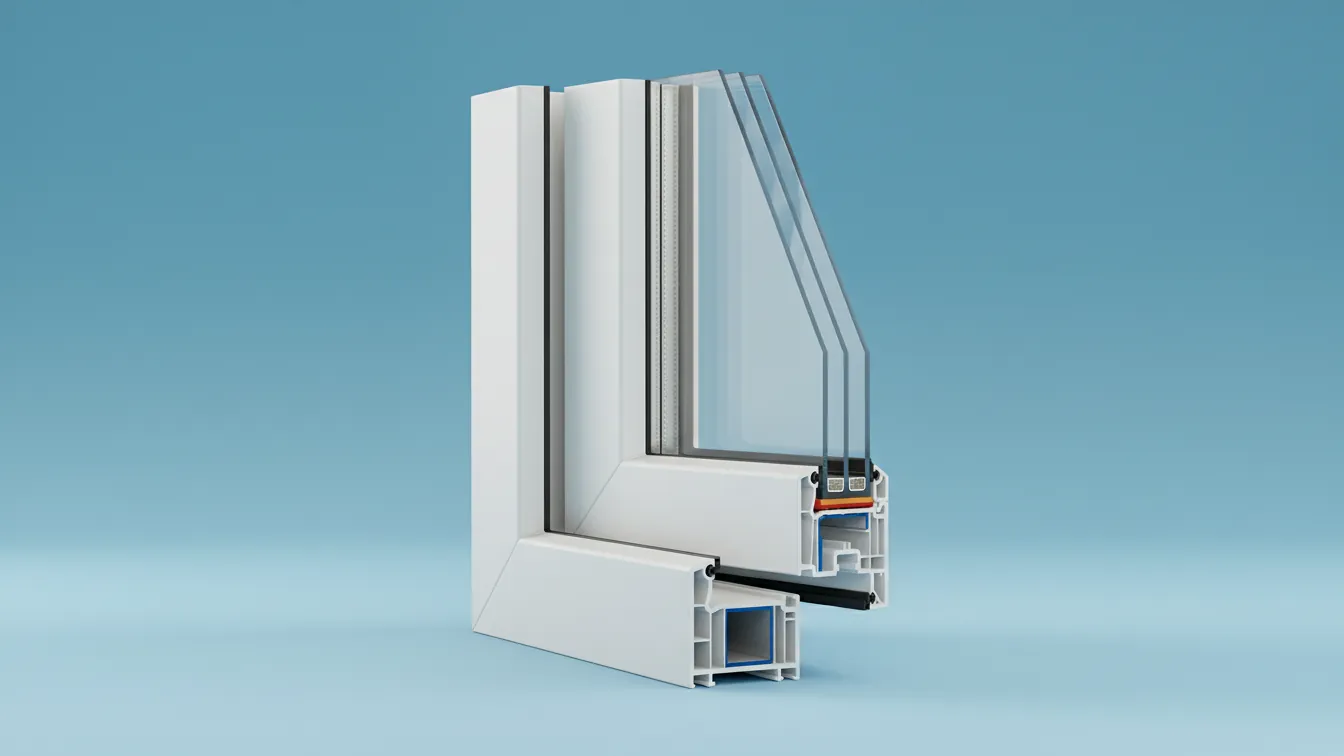
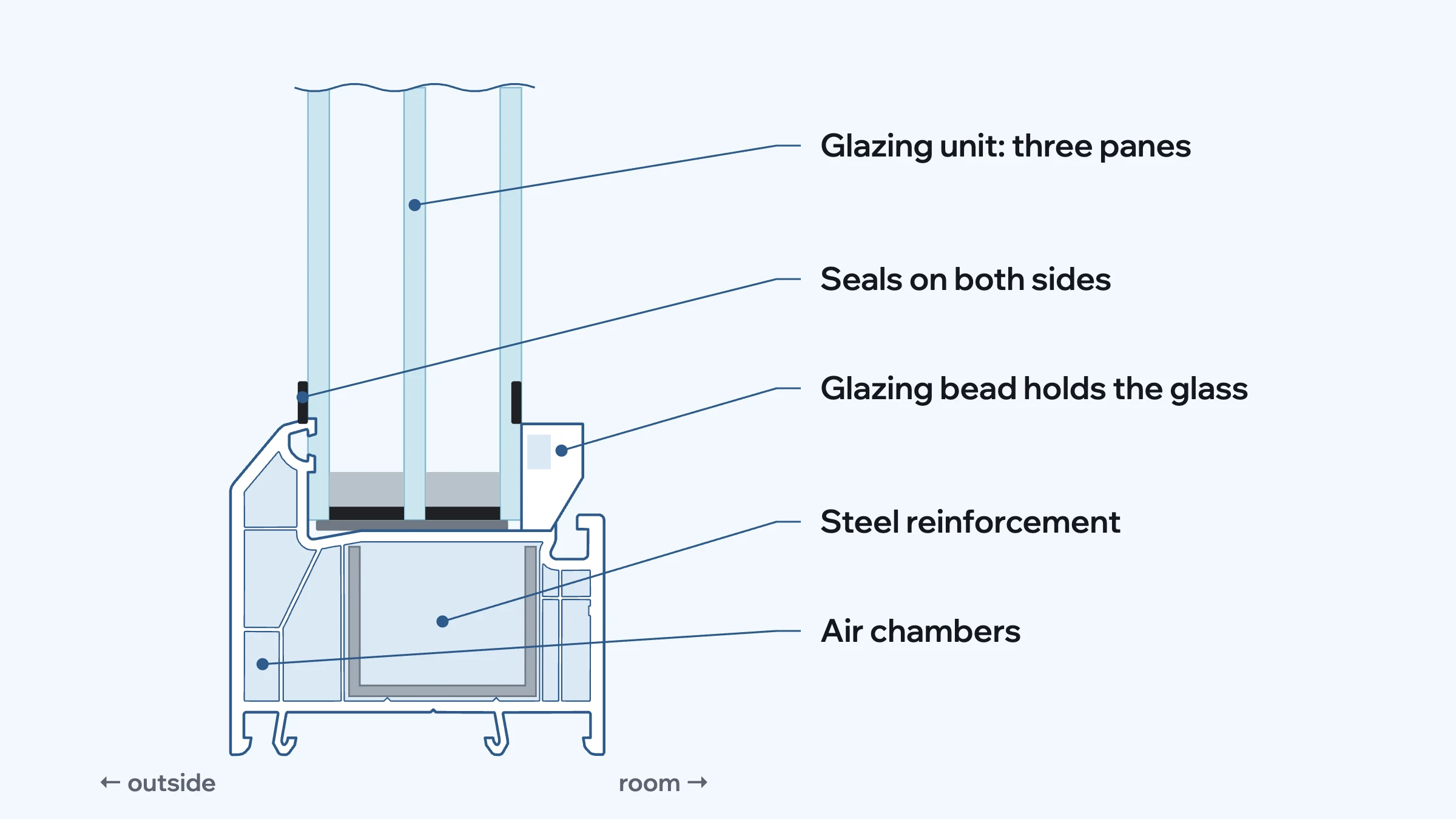
A uPVC frame is made of rigid plastic profiles with hollow chambers inside. The plastic itself conducts little heat, and a steel insert inside the main chamber gives the frame its stiffness.
| Aluminium, thermally broken | uPVC | |
|---|---|---|
| Stiffness | From the metal itself | From steel reinforcement inside |
| Heat flow | Limited by the insulating bar | Limited by the plastic and its chambers |
| Typical use | Large sliding doors, glass walls, shopfronts | Windows and doors of standard size |
| Finish | Powder coating or anodising | White plastic or a coloured foil |
| Key document | Test report under EN 14024, frame U-value | Profile data sheet, frame U-value |
Which frame keeps the heat out better?
Metal conducts heat far better than plastic, which is why a cold aluminium frame lets the outdoor temperature through to the room side. The thermal break exists to stop that: the Russian standard for aluminium windows, GOST 21519-2022, for example, describes the insulating insert as the part that reduces heat transfer and requires it for heated rooms. The same logic works in reverse for a room that is air-conditioned.
The mechanical strength of thermally broken profiles is tested under the European standard EN 14024. The heat flow through a frame is calculated under EN ISO 10077-2. Ask for the frame U-value of the exact system on offer: the lower the figure, the less heat passes through. With these numbers on paper, a thermally broken aluminium window and a uPVC window can be compared directly.
Which frame is stronger?
Aluminium. Its stiffness lets the frame stay narrow while carrying a heavy glass unit, so it is the usual choice for wide sliding doors, floor-to-ceiling glazing and shopfronts. uPVC relies on its steel insert, and its sections are wider for the same span.
For either material, the largest sash a system can take is set in the system maker's catalogue. A window larger than the catalogue allows needs its own tests. Ask for the catalogue page with the size limits for the model you are buying.
How do the frames behave in strong sun?
Both expand as they warm up. In a reference table of expansion coefficients, PVC is listed at 52 and aluminium at 23.1 millionths of its length per degree. Over a 2 m frame and a 40 degree swing between night and a sunlit afternoon, that comes to about 4 mm for uPVC and about 2 mm for aluminium. Good systems and installation joints allow for this movement, so ask how the frame is fixed and what gap is left around it.
Colour matters for uPVC. The European profile standard EN 12608-1 covers light coloured surfaces separately. Dark uPVC is usually a white profile with a coloured foil on top. The Russian standard GOST 30674-2023 also bans mass-coloured profiles with lower UV resistance than white ones unless they carry a protective foil. Ask whether the colour on offer is a foil, and on which sides.
Seals and glass are covered in more detail in windows for hot climates.
Which frame is quieter?
The frame material is only part of the answer. Most of the noise reduction comes from the glazing unit, the seals and how tightly the sash closes. The figure to ask for is Rw, the weighted sound reduction index from ISO 717-1, measured in decibels for the exact window with the exact glass. The choice of glass is explained in the guide to double glazed windows.
Which one looks better?
Aluminium gives slimmer sightlines and more glass for the same opening. It is finished with powder coating or anodising. Two European quality labels exist for these finishes: QUALICOAT for powder coatings in architecture and QUALANOD for anodised aluminium. Ask whether the coating line holds one of them and check the colour against a sample before the order.
uPVC frames are wider. They come in white or with a wood-effect or plain coloured foil, which may be applied on the outside, the inside or both.
What maintenance do they need?
Both need the same basic care: clean the tracks and drainage slots, keep the seals free of dust and adjust the hardware when a sash starts to drag.
Aluminium has one extra point. Metal parts touching the frame must not corrode it. Hardware in contact with aluminium is made of stainless steel, zinc alloys, brass, coated steel or polymers, and screws are stainless or zinc plated. Near the sea, ask what the rollers, hinges and screws are made of.
Which is cheaper?
There is no fixed answer, because the price is set by the whole specification rather than by the material alone. A thermally broken aluminium frame has more parts than a cold one: two profiles and the insulating bar between them. The total also depends on the size, the number of sliding tracks, the glass, the hardware and the installation.
To see where the difference comes from, ask two or three companies to quote the same size, glass and hardware. The Dubai window company ranking shows prices published on company websites. Companies with an aluminium windows page on their own website are listed in the aluminium window ranking for Dubai.
Which frame suits which home?
| Where | Frame | Why |
|---|---|---|
| Air-conditioned apartment or villa | Thermally broken aluminium or uPVC | Limits heat flow into cooled rooms |
| Wide sliding door to a terrace | Thermally broken aluminium | Narrow frame carries a large glass unit |
| Open balcony or storage room without cooling | Cold aluminium is acceptable | No cooled air to protect |
| Shop on the ground floor | Aluminium shopfront system | Large panes of safety glass |
Questions to ask the installer
- Which system is it, and is the aluminium thermally broken?
- What is the frame U-value, and what is the Rw of the window with this glass?
- What are the largest sash sizes in the system catalogue?
- For uPVC: is the profile reinforced with steel, and is the colour a foil?
- For aluminium: which coating, and what are the rollers and screws made of?
- How is the frame fixed, and how much gap is left for movement?
What to put in writing is set out in the window installation contract guide, and how to accept the work in the installation checklist. The general choice of windows is covered in which windows are best for your home.
Questions and answers
Which windows are best, uPVC or aluminium?
For standard windows in a cooled room, both work once the aluminium is thermally broken. For wide sliding doors and glass walls, aluminium.
What is a thermal break?
An insulating bar between the outer and inner aluminium profiles that stops heat from passing straight through the metal.
Does uPVC warp in the heat?
It expands more than aluminium, about 4 mm over a 2 m frame with a 40 degree swing. Reinforcement, a light colour or a protective foil, and a correct gap at installation keep it working.
Is aluminium noisier than uPVC?
Not by itself. Ask for the Rw of the exact window with its glass.
Sources
- European standards EN 14024 (thermally broken metal profiles), EN ISO 10077-2 (heat transfer through frames), EN 12608-1 (uPVC profiles); ISO 717-1 (sound insulation). QUALICOAT and QUALANOD. Russian standards for aluminium windows, hardware and uPVC windows. Reference table of thermal expansion coefficients. Checked in November 2026.