
 kna
Published 10 November 2026. Updated 10 November 2026. Editorial team
REHAU or VEKA: both brands make uPVC profile systems of the same depths, so compare like with like. In the 70 mm middle range the published thermal resistance is the same; VEKA comes out ahead in the entry and top ranges. Both brands claim class A frame walls. Frame depth, the glazing you need and the installation decide the rest.
Which REHAU and VEKA systems are comparable?
Pair them by frame depth. Figures below are from the manufacturers' data sheets.
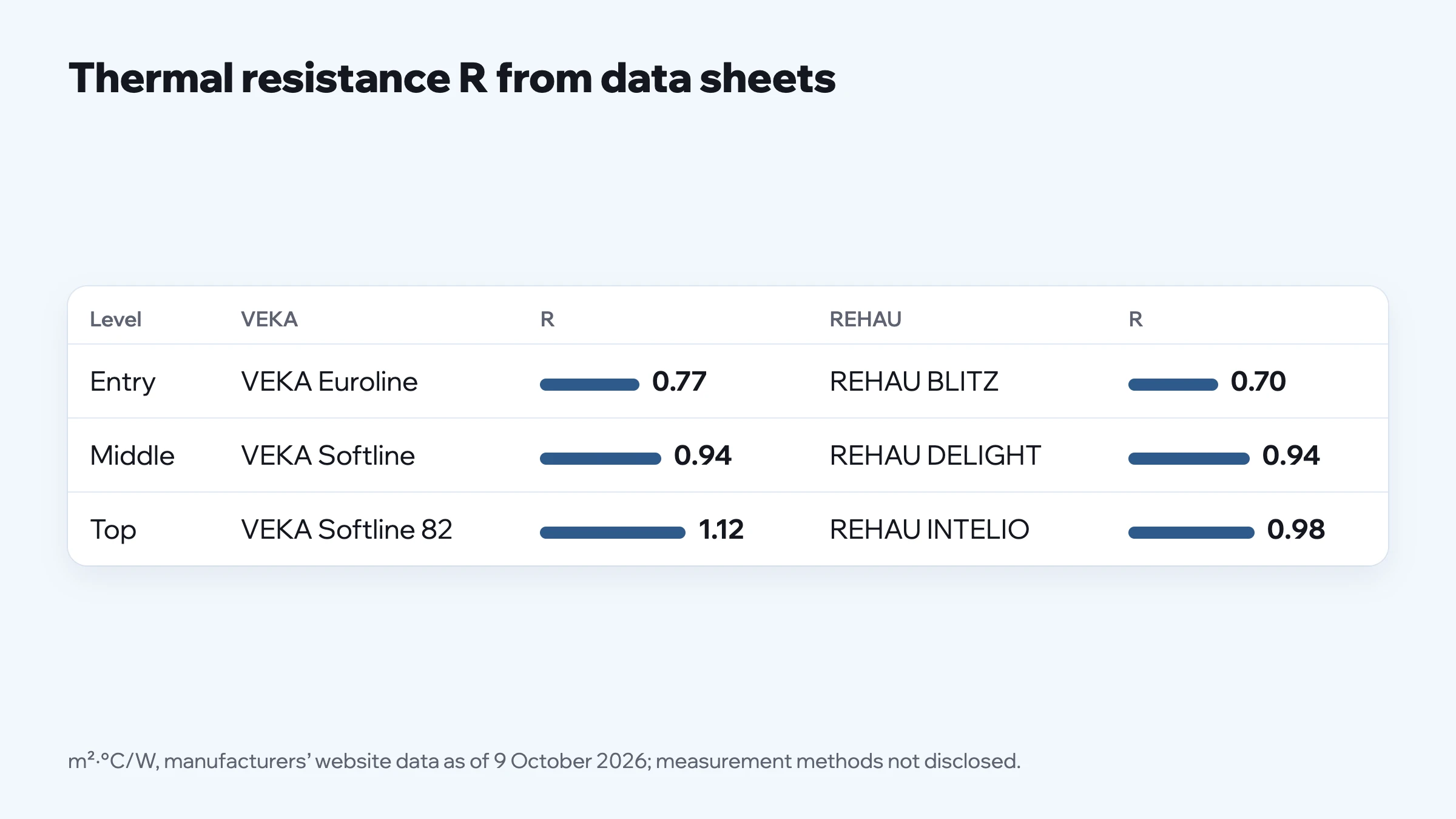
| Range | VEKA | REHAU |
|---|---|---|
| Entry | Euroline: 58 · 3 · 0.77 | BLITZ: 60 · 3 · 0.70 · 32 |
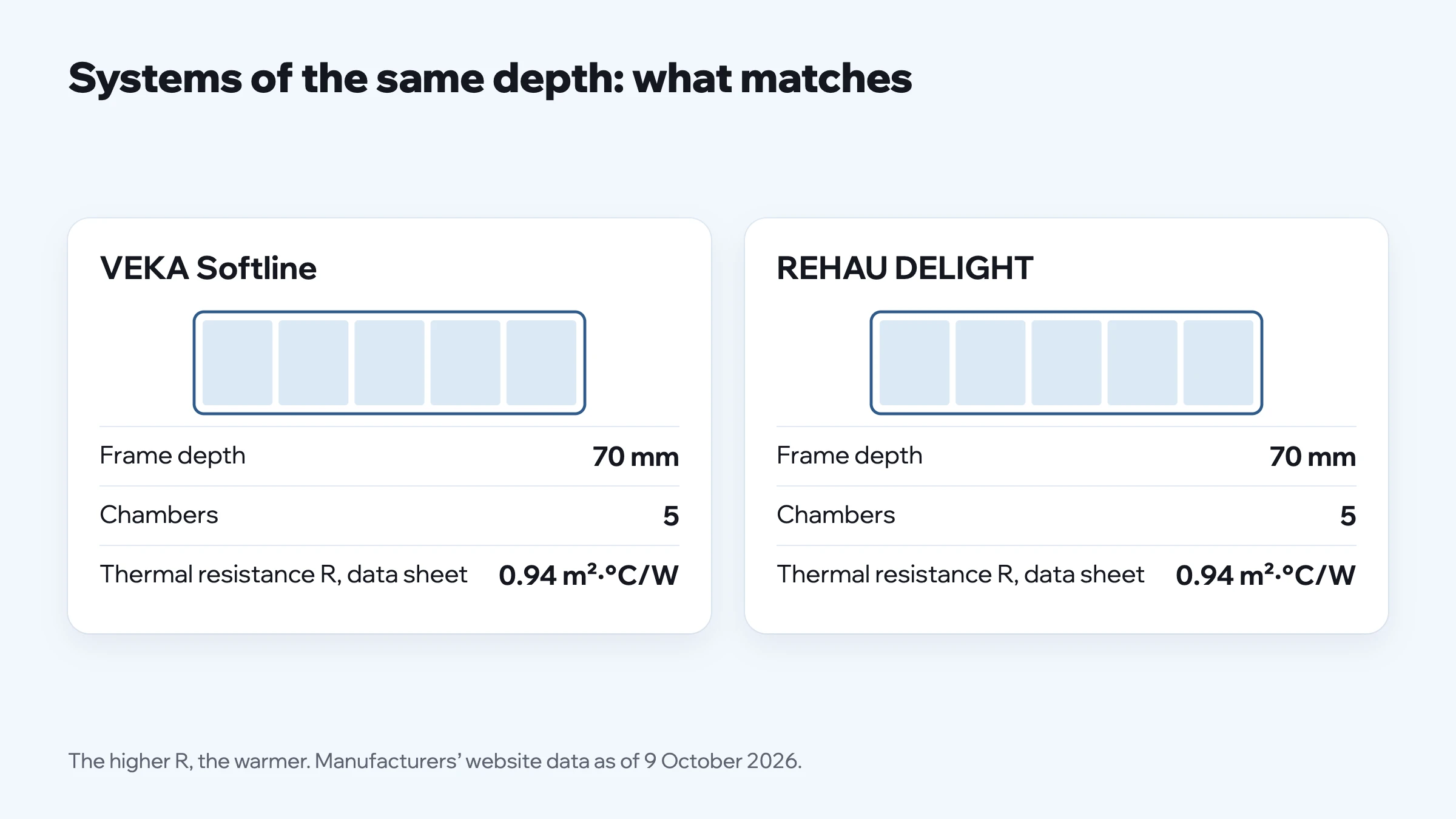
| Middle | Softline: 70 · 5 · 0.94 | DELIGHT: 70 · 5 · 0.94 · 40 GRAZIO: 70 · 5 · 0.85 · 40 |
| Top | Softline 82: 82 · 7 / 6 · 1.12 | INTELIO: 80 · 6 · 0.98 · 53 |
The data were taken from the brands' Russian-market websites on 9 October 2026. A higher R means less heat passes through the frame. The manufacturers do not publish how R was measured, so differences of a few hundredths should not be overrated. VEKA's data sheets give no maximum glazing thickness. Ranges and figures sold in the Gulf may differ: ask the supplier for the data sheet of the system on offer.
Where is the difference real?
The VEKA Softline 82 flagship is 2 mm deeper than REHAU INTELIO, has more chambers and a thermal resistance about one seventh higher. In the entry range, VEKA Euroline is warmer than REHAU BLITZ despite being 2 mm shallower.
The 70 mm systems match on the published figures: VEKA Softline and REHAU DELIGHT both show 5 chambers and R 0.94. Here the hardware, the glass and the quality of installation decide.
If you need thick glazing, REHAU INTELIO takes units up to 53 mm, the most among the published figures.
Are REHAU and VEKA windows good quality?
Both claim the top class of frame walls. VEKA states that all its profiles meet DIN EN 12608 class A. For INTELIO, REHAU's Russian-market site gives class A under the Russian standard GOST 23166-99. Coloured and laminated versions are offered by both. A good profile still needs a sound glazing unit, hardware and installation, so judge the whole window, not the brand name.
How do you check a REHAU profile is genuine?
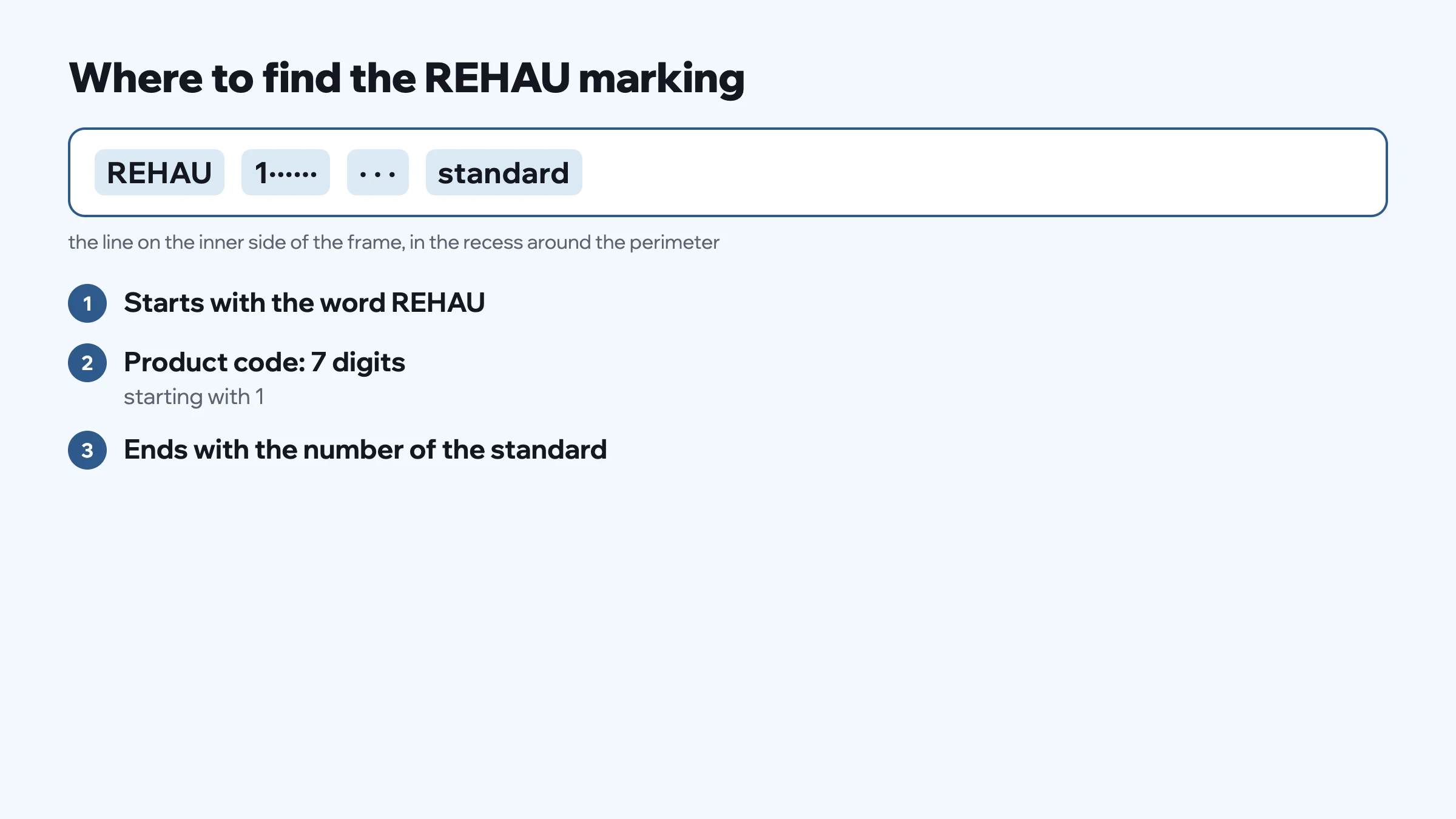
REHAU's site explains the marking: it is printed on the inner side of the frame, in the recess around the perimeter. It starts with the brand name and ends with the number of the standard. The product code has seven digits and starts with 1.
What to ask the installer
- Which system exactly is offered, and where is its data sheet?
- Will the sash take the glazing unit you need?
- Who makes the hinges, and how many locking points are there?
- How is the joint between frame and wall built?
The full buying steps are in which windows are best for your home, and frame materials are compared in aluminium vs uPVC windows. Installers are compared in the Dubai window company ranking.
Questions and answers
REHAU or VEKA: which is warmer?
It depends on the range: VEKA leads in the entry and top ranges, the middle range is a tie.
Is REHAU a good window?
Its systems state class A frame walls, and INTELIO takes glazing up to 53 mm. The result depends on the glazing, hardware and installer as much as on the profile.
Are VEKA windows good quality?
VEKA states DIN EN 12608 class A for all its profiles, and Softline 82 has the highest published thermal resistance in this comparison.
How does REHAU GRAZIO differ from DELIGHT?
Same depth and number of chambers; DELIGHT loses less heat (R 0.94 against 0.85).
Can a thick glazing unit go into REHAU BLITZ?
Its data sheet gives a maximum of 32 mm.
Sources
- Technical data on veka.ru and rhsolutions.ru, taken on 9 October 2026; DIN EN 12608.